THE UNIVERSITY
PHILIPPINE NORMAL UNIVERSITY SOUTH LUZON
HISTORY AND MILESTONE
A Brief History of the
PHILIPPINE NORMAL UNIVERSITY SOUTH LUZON
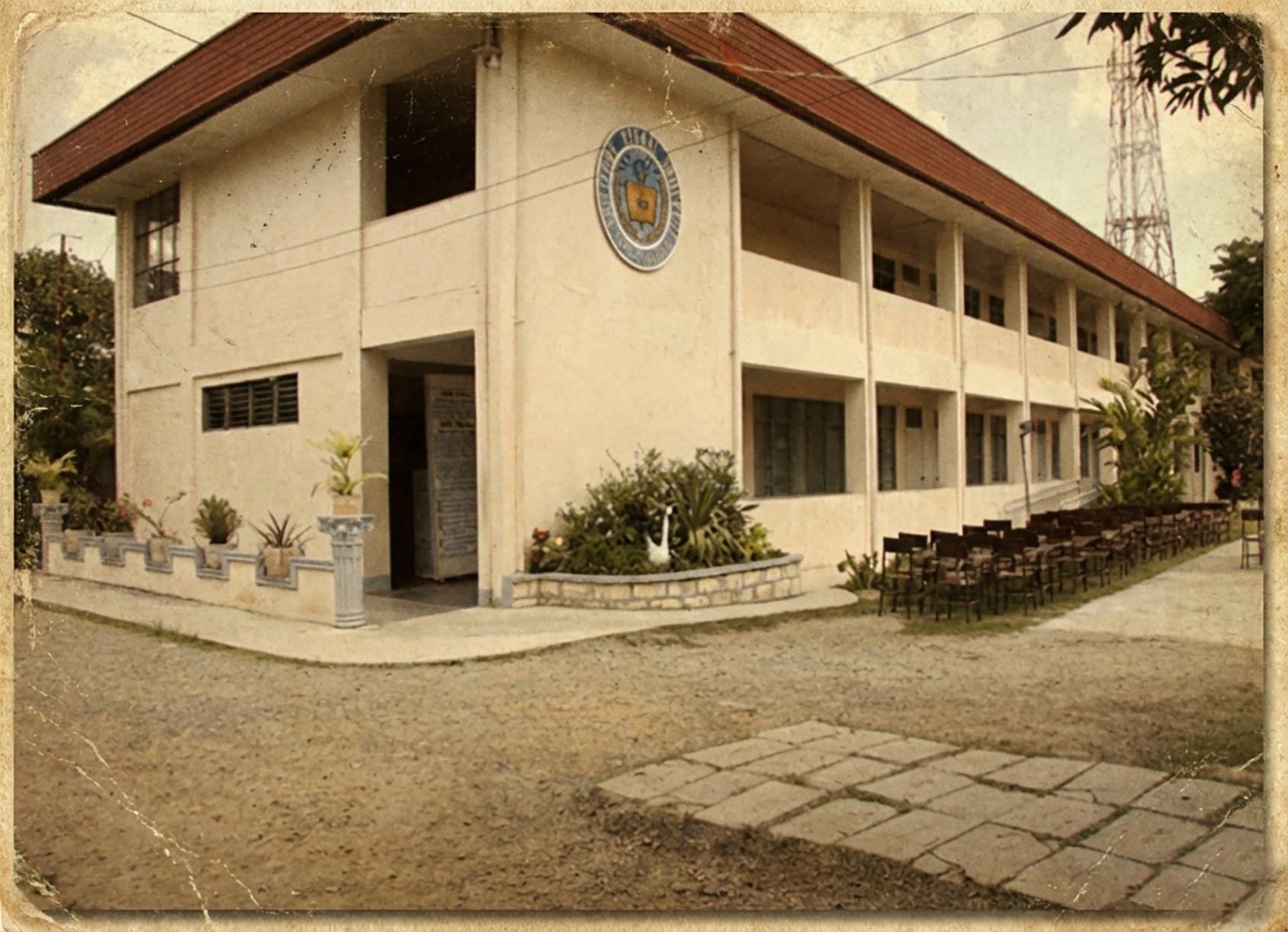
PNU South Luzon is the fourth regional campus of Philippine Normal University. It is situated on the flourishing town of Lopez, Quezon in Region IV-A and caters to students and educators from Southern Tagalog and the Bicol Region. It began its operation as a teacher-training institution in this part of the Southern Tagalog Region in 1980, in partnership with the Polytechnic University of Philippines (PUP-PNC Consortium). The contract of agreement between the two state universities expired in 1993, thus paving the way for the establishment of PNU – Quezon as the fifth PNU external campus.
On its first six years of existence as a campus, the University was temporarily accommodated in one of Lopez Comprehensive National High School’ s building’s, the Vera Hall. Its stay within the compound of LNCHS became possible through the Memorandum of Agreement (MOA) among the DECS, the Local Government of Lopez and PNU. In 1999, the University moved to its newly constructed two-story academic building situated on a one-hectare lot donated by the Provincial Government of Quezon to PNU. The municipal leadership of Lopez has a standing commitment to the University for an additional one-hectare lot.
By virtue of BOR Resolution No. U-1865, s. 2012, PNU South Luzon was designated as the Technology and Livelihood Education Hub of the PNU System. To augment the inadequate number of teachers who can teach TLE in the K to 12 Curriculum, Bachelor of Technology and Livelihood Education was offered.
In 2014 PNU – Quezon changed its name to PNU South Luzon by virtue of BOR Resolution No. U-2054, s. 2014. As the Technology and Livelihood Education Hub, PNU South Luzon envisions the campus as an internationally recognized and nationally responsive teacher education university specializing in technology and livelihood education.
As Technology and Livelihood Education Hub, Philippine Normal University South Luzon offers Bachelor of Technology and Livelihood Education (BTLE) with majorship in Home Economics (HE) and Agri-Fishery Arts (AFA). A Practice House and a Compact Demo Farm are currently being conceptualized to augment student learning.
The Technology and Livelihood Education Hub also hosts a number of activities for students, stakeholders and TLE advocates.
Last December 2017, although still in its infancy, PNU South Luzon successfully conducted the first International Conference on Technology and Livelihood Education (ICTLE). This was attended by more than 150 educators, researchers, education leaders and Tech-Voc practitioners from all over the country and some parts of Asia. This coming together of TLE advocates gave rise to the Association of Life Skills and Technology Advocates (ALTA) International, Inc. and its counterpart-Youth ALTA.
Also, in its 25th Founding Anniversary last July 2018. PNU South Luzon conducted Technolympics and launched TLE Bazaar. The former is an avenue where which students showcase their skills in the four major strands of TLE: Home Economics, Agri-Fishery Arts, Industrial Arts and Information Communication Technology. The latter, on the other hand, is a monthly fair at the campus, joined by several concessionaires, community partners and students’ entrepreneurs. This activity intends to promote entrepreneurship among the locals.
Despite these developments and initiatives, PNU South Luzon is still wanting as a TLE Hub. To respond to this gap, the campus’ faculty and staff visited Central Luzon State University last April 2018 to see facilities and practices which may be adopted in the South Luzon campus. The group also visited a number of farming communities and enterprise such as HEAL (Haven for Ecological and Alternative Living) in Villasis, Pangasinan, GK Enchanted Farm in Angat, Bulacan and the Costales Farm in Majayjay, Laguna.
By the BOR Resolution No. U-2724, s. 2017 confirms the MOA with the DPWH Region IV-A for the construction of the TLE Innovation Building. The four-storey TLE Innovation Building is the first of its kind in the province of Quezon because of its unique architectural design as center of TLE programs and activities. As of this writing, it is on its fourth and final phase and it will be operational soon.
THE PNU SEAL

The PNU Seal is composed of the following symbols and their corresponding meaning:
The Torch stands for the light that illumines the path in building a temple of immortal souls in future generations.
The Open Book means that anyone may come to engraft a branch of knowledge in the stock of wisdom.
The Laurel Leaves serve as the emblem of victory, of a courageous flight of success.
All these symbols are interwoven together with the university’s triadic vision: Truth, Excellence, and Service as PNU continues to uphold its mandate as the premier institute in producing and nurturing innovative future teachers and education leaders.
THE MOTHER AND CHILD

The Mother and Child is a distinct icon of PNU, which is symbolized in the following:
The Mother symbolizes Inang Pamantasan.
As a mother is the light to every Filipino home, so is the teacher who is the light to the youth of every generation.
As the mother and child look forward ahead, they share the same vision of and selflessly working towards the realization of a more positive and stronger future for the nation through a dedicated workforce of innovative teachers and exemplary leaders.
While the book depicts a plethora of knowledge, the child being held by the hand to the right side of Inang Pamantasan signifies the institution’s commitment of guarding human ken and the teaching of Right—right character and right discernment by preserving universal truths and cherished Filipino values.
THE TORCH WITH THE PNU FLAME

The Torch with the PNU Flame has the following symbolism:
The torch icon symbolizes the source of enlightenment and guidance.
This icon of the torch is developed to project the University’s priority function of providing a superb learning experience.
The flame is designed with the initials of the University, which represent the dynamics and utmost willingness of PNU in leading the path of nurturing future specialized teachers and educational leaders with varied innovative modalities of instruction and strong conceptual foundations.